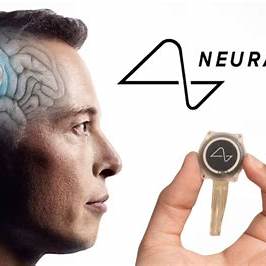
Welcome to the future—where the robots created by humans have started asking humans to verify they’re human just to operate the robots they themselves created. The line between man and machine continues to blur, and now, artificial intelligence (AI) is not only predicting behavior but actively attempting to reshape the human mind. What was once the realm of science fiction is becoming reality, as AI-driven mind control is being proposed as a solution to criminal rehabilitation.
The Proposal: AI-Induced Rehabilitation
A scientist introduced 'Cognify,' a concept aiming to revolutionize criminal rehabilitation by implanting AI-generated memories into offenders' brains. The process involves:
- Conducting high-resolution brain scans to map neural pathways.
- Using AI to create vivid, personalized memories reflecting the consequences of the individual's crimes.
- Implanting these memories to induce feelings of remorse and empathy, theoretically leading to rehabilitation.
This method proposes to replace lengthy prison sentences with a brief intervention, potentially reducing prison overcrowding and focusing on rehabilitation over punishment.
Ethical and Practical Concerns
While innovative, this approach raises several issues:
- Autonomy and Consent: Altering an individual's memories challenges personal autonomy. Even with consent, the power dynamics in a prison setting may compromise voluntary agreement.
- Identity and Authenticity: Memories shape identity. Artificially altering them can lead to questions about the authenticity of the individual's personality post-intervention.
- Potential for Abuse: Such technology could be misused for coercive re-education or suppression of dissent, especially if definitions of 'criminal behavior' are expanded.
Minority Report and the AI-Controlled Justice System
This isn't the first time we've seen these ideas. The 2002 film Minority Report, based on Philip K. Dick’s novella, depicted a future where law enforcement used a predictive system (PreCrime) to arrest individuals before they committed crimes. This eerie forecast is now inching toward reality:
- Predictive Policing: AI systems analyze data to predict potential crimes before they happen, mirroring PreCrime.
- AI-Based Risk Assessments: Courts use algorithms to assess recidivism risks, influencing sentencing and parole decisions.
- Surveillance and Thought Control: The proposed AI-induced rehabilitation would effectively modify a person’s thoughts, leading to concerns about free will.
Cognify vs. PreCogs: Predicting Crime vs. Controlling Minds
The parallels between Cognify and the PreCogs from Minority Report are striking. In the film, the PreCogs were genetically modified humans with the ability to foresee crimes before they happened. Their visions were used to justify arrests before any crime had been committed. Now, in reality, Cognify proposes to go beyond predicting crime—it aims to alter a person's mind so that they never even consider criminal behavior again.
- Predictive vs. Prescriptive Justice: While PreCogs predicted crime, Cognify aims to forcibly reshape criminals’ perceptions, essentially prescribing their thoughts and feelings.
- AI as Judge, Jury, and Executioner: With PreCogs, the justice system relied on visions; with Cognify, AI not only judges but also rewires human cognition itself.
- Loss of Free Will: In both cases, the accused are deprived of choice—whether through preemptive arrest or the implantation of artificial remorse.
The key takeaway from Minority Report is the loss of personal agency when technology dictates who is guilty or innocent. If AI memory implants become a reality, we could see a justice system that no longer corrects behavior but outright controls minds.
The Karmic Cycle: How They Tell Us Before They Do It
The powers that be have always revealed their plans ahead of time. Why? Because of the karmic cycle. By placing their intentions in books, movies, and media, they believe they absolve themselves of wrongdoing. If the masses accept these ideas without resistance, it is seen as consent.
Think about it:
- Minority Report was released in 2002, and now AI-driven justice systems are being developed.
- Many dystopian films have shown authoritarian control through technology, yet people dismiss them as entertainment.
- The shift from fiction to reality happens gradually, conditioning society to accept what was once unthinkable.
The burden is on us to recognize these warning signs. AI’s role in justice should enhance fairness, not erode human rights. If we don’t question these developments, we risk sleepwalking into a future where thoughts are no longer our own.
Conclusion
AI offers potential benefits in criminal justice, but proposals like 'Cognify' demand careful ethical scrutiny. The transition from predictive policing to AI-driven mind control is not just a hypothetical concern—it is unfolding before our eyes.
The question is: will we see through the deception, or will we allow fiction to become our reality?


No comments:
Post a Comment